You Don't Learn AI on a Course (But This Works)
 Erwin Berkouwer
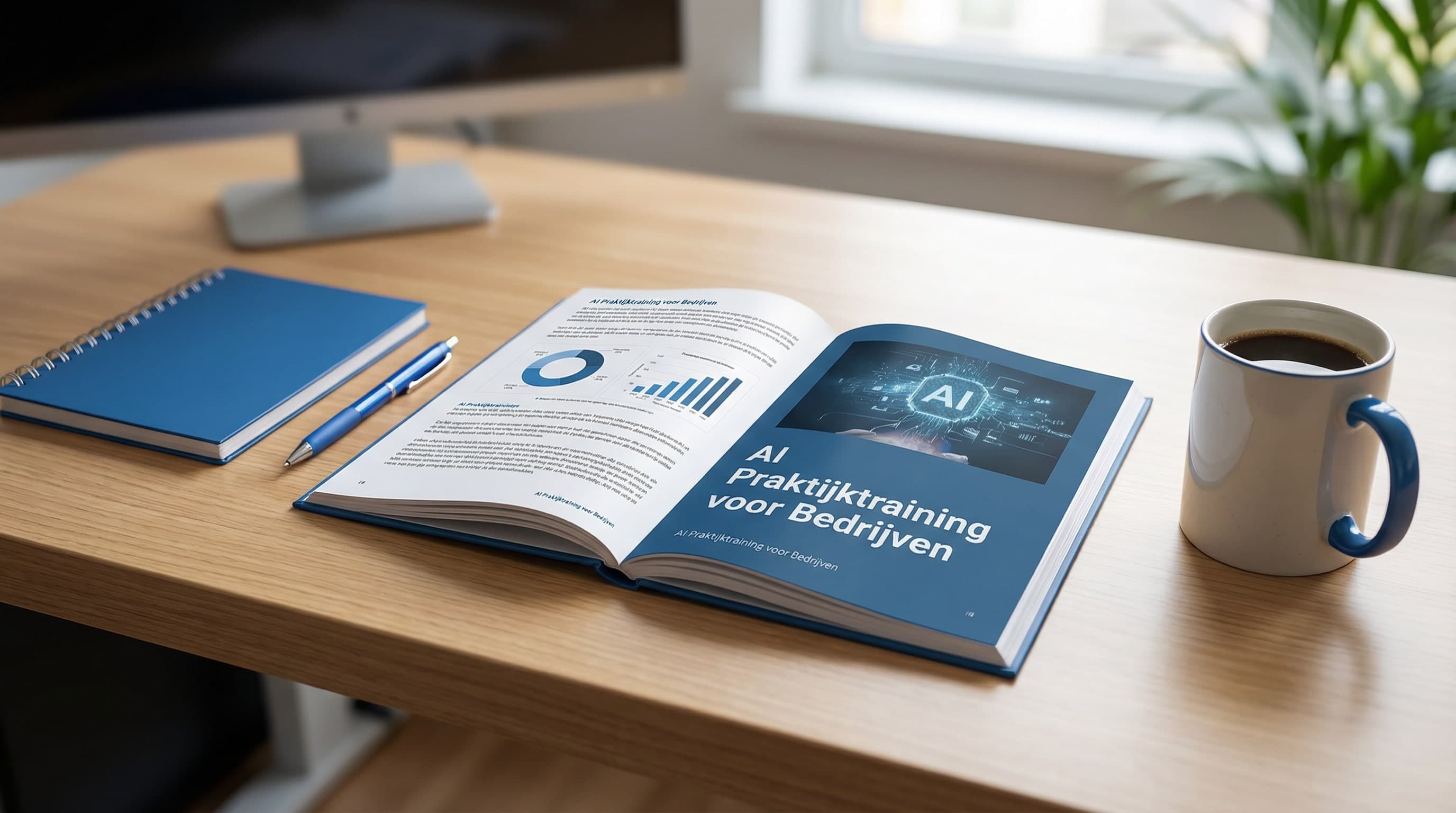
The best way to learn AI is by doing it, with real problems from your own business. A two-day course gives you knowledge, but without immediate use it fades fast. That's why learning by doing works better: your team builds a solution along with you, one it can then run itself.
Why do AI courses often fail?
Most AI training follows the classic model of knowledge transfer: a day or two of theory, a certificate, then back to work. For a field that changes as fast as AI, that falls short.
Three reasons courses often fail:
- The forgetting curve. What you don't use, you mostly forget within a few weeks. Training on Tuesday, nothing done on Wednesday, and by Friday most of it has faded.
- Generic examples. “Use ChatGPT to write emails” does little for a logistics manager who deals with specific system integrations.
- AI moves faster than course material. A course put together six months ago covers tools that have already been overtaken.
Meanwhile the costs add up. Without immediate use, you pay for knowledge your team doesn't apply. A well-chosen, automated process, on the other hand, often saves hours per employee per week.
Why is AI literacy a topic now?
AI is no longer an exception in SMEs: many companies already use at least one AI tool. At the same time, part of all AI projects fail, often because of unrealistic expectations or because nobody knows how to apply what they learned on a course. On top of that, the EU AI Act requires organisations that work with AI systems to make sure their staff have enough AI literacy.
So the question isn't whether your team will work with AI, but how it learns to.
So how do you learn AI?
The approach we see working: learning by doing, with real problems from your own business. In three steps:
Step 1: Pick one concrete problem
Don't start with theory. Start with a bottleneck everyone recognises:
- “We lose hours every day processing supplier emails.”
- “Putting together a quote takes half a day.”
- “Customer questions are searched by hand in a huge database.”
Start with the process where your team feels the most pain, not with the most fun AI project. That gives you the fastest visible win and the most support.
Step 2: Build it together
Build the AI agent or the automated process together with your team, so people learn the logic from the inside. No explanation afterwards, but thinking along while it gets built. You'll find examples of links with existing software on our integrations page.
Step 3: Take it over yourselves
Once the system is running, you hand it over to your own team. It then knows how to adjust the system, spot problems and pick up the next process on its own. Those are the skills a course can barely teach.
Course or learning by doing: what fits when?
| Traditional AI course | Learning by doing | |
|---|---|---|
| Format | One or two days of theory | Working on a real process |
| Examples | Generic | From your own business |
| After a month | Much is forgotten | A working system in use |
| Result | Hard to measure | Measurable in time saved |
| Team independence | Varies | Higher, because people built it |
| Fit with your processes | Limited | Complete |
When is learning by doing the right approach?
It works best if:
- you have repetitive, time-consuming processes that frustrate your team every day;
- your team is willing to take part in the implementation and not just watch;
- you want to see results within weeks, not after a year-long roadmap;
- you want to anchor AI literacy in your organisation through hands-on experience.
For teams that want to keep growing in how they work with AI, there's the AI adoption programme. Not sure which process comes first? An AI scan with the UnifyAI Agent sharpens that for you.
Frequently asked questions
Does my team need technical knowledge to learn AI?
No. The skills that matter, like good prompting, connecting systems and judging results, aren't technical skills. They're new working habits that anyone can learn.
What's the difference with a regular AI course?
A course gives you theory with generic examples. With learning by doing, you build a working system for your own situation, so your team learns while it sees real results in its own work environment.
What if the AI tools change or improve?
You learn the underlying logic, not one specific tool. When a tool changes, your team adapts because it understands what AI does, not just where the buttons are.
Does the EU AI Act require anything from us on AI training?
Yes. The EU AI Act requires organisations that work with AI systems to make sure the staff involved have enough AI literacy. Working with real systems, and documenting that, helps.
What's the first step?
Pick one process that costs your team a lot of time and start there. Together we work out which process saves the most time, and your team learns it by doing it. Book an intro call.
Frequently asked questions
Short, clear answers so you can decide faster.
Does my team need technical knowledge to learn AI?
No. The skills that matter, like good prompting, connecting systems and judging results, aren't technical skills. They're new working habits that anyone can learn.
What's the difference with a regular AI course?
A course gives you theory with generic examples. With learning by doing, you build a working system for your own situation, so your team learns while it sees real results.
What if the AI tools change or improve?
You learn the underlying logic, not one specific tool. When a tool changes, your team adapts because it understands what AI does.
Does the EU AI Act require anything from us on AI training?
Yes. The EU AI Act requires organisations that work with AI systems to make sure the staff involved have enough AI literacy.