Your accountant hates this part of the job (and you pay for it)
 Erwin Berkouwer
The work your accountant likes least is also the work that costs you money without giving you any insight: keying in invoices, matching bank transactions and running standard reports. An AI agent can take most of that repetitive part off their hands, so your accountant has time left for advice. This article shows which tasks those are, what they cost and how to automate them without replacing your accountant.
They don't hate that work because they're bad at it. They hate it because they can do better. And you pay the same hourly rate for every hour of it.
Which tasks does your accountant hate most?
Ask them. Chances are they'll name these three:
1. Keying in invoices by hand. Every incoming invoice has to be read, categorised and entered into the accounting software. For a small or mid-sized business that's easily dozens to hundreds of invoices a month, with a few minutes of work per invoice.
2. Matching bank transactions. Every transfer, payment and reversal has to be matched to the right invoice or cost item. Done by hand that takes a lot of time, and much of it is routine.
3. Running standard reports. VAT return, monthly profit and loss, debtor ageing analysis: repetitive, error-prone when done by hand and easy to automate.
A lot of the work accountants and bookkeepers do is collecting data, entering data and producing standard reports. That's time that doesn't go into advice or strategic input for your business.
What does this cost you as a business owner?
Below is a worked example with assumptions, not an average. Adjust the numbers to your own situation.
| Item | Calculation | Result |
|---|---|---|
| Hours of manual bookkeeping | 5 hours a week × 52 weeks | 260 hours a year |
| Assumed accountant rate | €75 to €100 an hour (average €87.50) | n/a |
| Cost of manual work | 260 hours × €87.50 | €22,750 a year |
Against that you set the cost of AI automation. What that is for you depends on the size of your administration and the number of integrations. Only the part of the work the agent actually takes over saves you money, so count on realistic assumptions.
Those hours weren't wasted on slacking: your accountant worked hard. But it was work that gives you no insight, advice or savings. Just data entry.
How does an AI agent automate this work?
An AI agent for bookkeeping works like a digital colleague that:
- Reads invoices with OCR: it picks out supplier, amount, VAT code and due date, including from scans and photos.
- Categorises automatically: based on your past bookings, it learns which ledger item goes with which invoice.
- Matches bank transactions: it links payments to open items and puts doubtful cases to a person.
- Prepares reports: the VAT overview, profit and loss and cash flow overview are ready for review.
- Flags deviations: duplicate invoices, unusual transactions and late payments get reported.
The result: less manual entry and a month-end close that's done sooner. The agent still makes a mistake now and then, so deviations go to a person. That's how you stay in control.
What do you get out of it?
- Time for advice: hours that now go into data entry are freed up for analysis and advice.
- Fewer entry errors to fix afterwards.
- Faster closes: you know sooner how your business is doing and can adjust sooner.
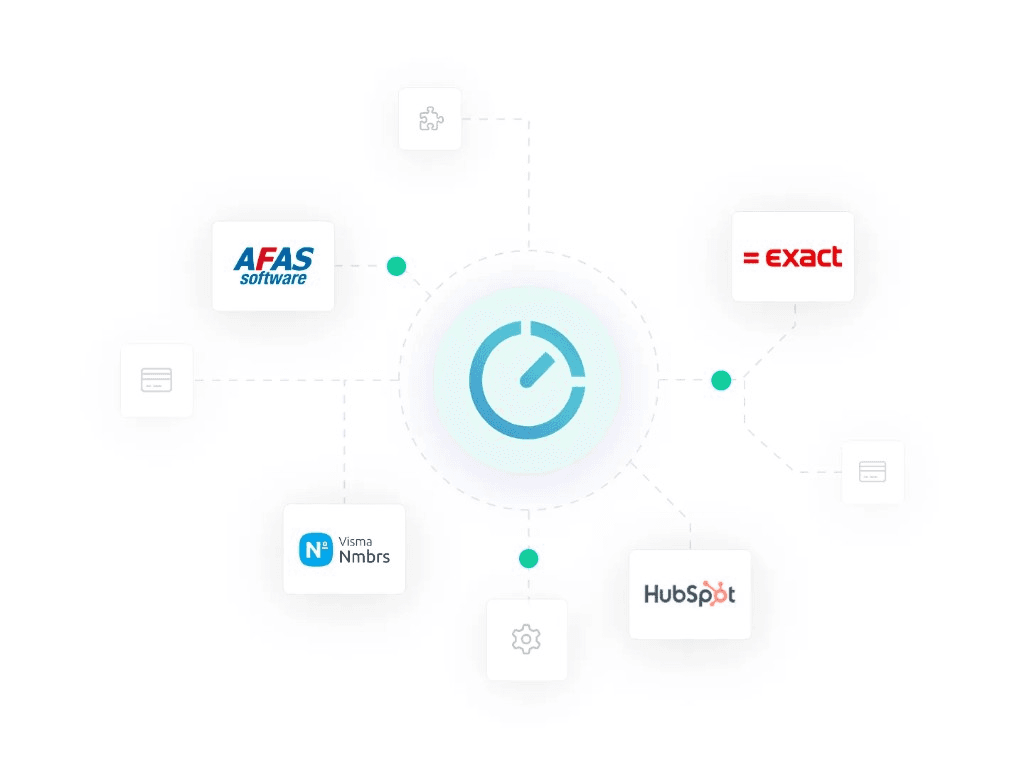
- No system switch needed: an agent can connect to your existing accounting package, for example through an integration.
The real value isn't only the direct time saving. It's seeing the numbers earlier. You can read more about this kind of automation on the page about invoices and administration.
How does UnifyAI approach this?
UnifyAI builds AI agents that connect to existing accounting software. A project roughly runs like this:
- Analysis: we map which tasks can be automated and what that gets you.
- Implementation: an agent that connects to your existing software and follows your bookkeeping rules.
- Training: the agent learns your categorisations and report structure.
- Monitoring: we keep an eye on accuracy and adjust where needed.
That way your accountant can spend their time on advice, tax questions and strategic input.
Frequently asked questions
Does AI replace my accountant?
No. AI takes over repetitive tasks: data entry, reconciliation and standard reports. Your accountant stays in control: they check, advise and sign off.
Which accounting packages are supported?
That depends on the package and the connections available. The integrations page shows what's possible. If your package isn't listed, get in touch.
How accurate is the automation?
That varies with the mix of documents and the quality of the scans. A good setup always has a person check deviations and doubtful cases, so mistakes don't slip into your books unnoticed.
What does an implementation cost?
That depends on the size of your administration and the integrations you need. In an intro call we go through your situation.
What's a sensible next step?
First count how many hours a month your team and your accountant spend on entry, matching and standard reports. Then make an AI scan for an overview of opportunities, or book an intro call. For the broader picture, there's AI consultancy.
Frequently asked questions
Short, clear answers so you can decide faster.
Does AI replace my accountant?
No. AI takes over repetitive tasks: data entry, reconciliation and standard reports. Your accountant stays in control: they check, advise and sign off.
Which accounting packages are supported?
That depends on the package and the connections available. The integrations page shows what's possible. If your package isn't listed, get in touch.
How accurate is the automation?
That varies with the mix of documents and the quality of the scans. A good setup always has a person check deviations and doubtful cases, so mistakes don't slip into your books unnoticed.
What does an implementation cost?
That depends on the size of your administration and the integrations you need. In an intro call we go through your situation and what fits.