AI Strategy? Start with One Process, Not a 50-Page Plan
 Erwin Berkouwer
The best AI strategy for an SME starts with one concrete process, not a 50-page plan. Pick a repetitive process that costs your team a lot of time, build a working solution for it and learn from the results. After that you know better than any roadmap where AI pays off in your business.
Why do big AI plans fail?
Recognise this? An extensive “AI roadmap” of dozens of pages, a hefty budget and a project group. Half a year later the document sits in a drawer and nothing has been automated. The cause is almost always the same: too much strategy, too little action.
Mostly it costs you time. While you analyse, a competitor may already have automated a quoting process, purchase invoices or frequently asked customer questions. Every month you wait, your team keeps working on tasks a system could take over.
What strategy works for an SME?
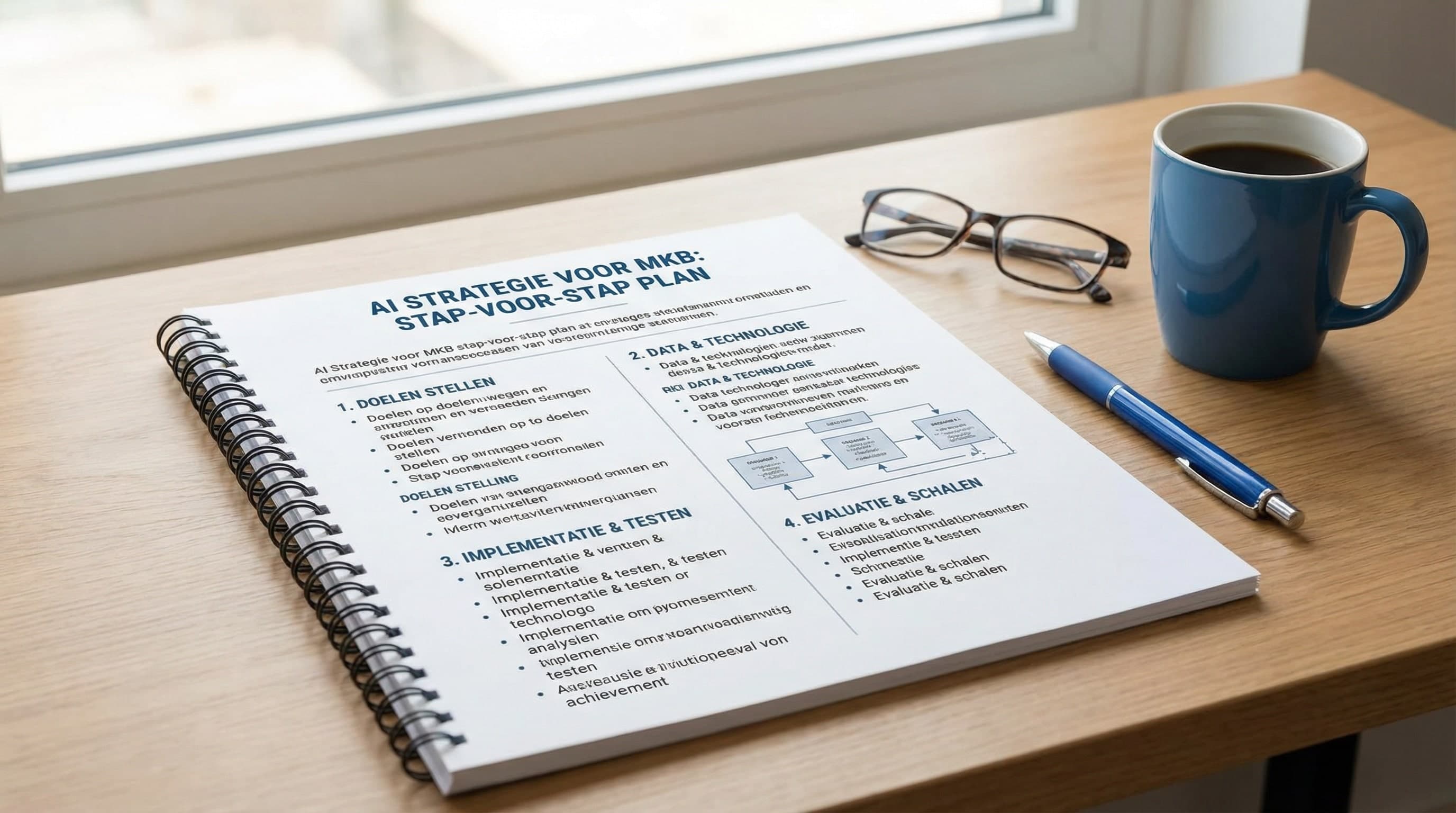
Pick one process, build a working solution for it, go live and learn from the results. No roadmap, no strategy document, just start. In four steps:
- Pick one painful, repetitive process (see the selection framework below).
- Build a working prototype and test it with real examples.
- Go live with real data and measure what it delivers.
- Only scale up after proof, based on what you've learned.
The result isn't a strategy on paper but experience: you know what AI does in your context, how your team handles it and what the next opportunities are.
How do you choose the right first process?
This is where many companies trip up: they pick a process that's too complex, has too little data or delivers too little. Use this framework:
| Criterion | Good for AI | Not suited to AI |
|---|---|---|
| Repeatability | Same steps, over and over | Different every time |
| Time spent | Several hours a week | Occasional, hardly any time |
| Available data | Plenty of examples per month | Only a handful of examples |
| Human judgement | Objective, rule-based | Emotional, situational |
Processes that often fit well:
- reading and booking purchase invoices;
- answering or forwarding customer questions by email;
- triaging quote requests and drafting a proposal;
- compiling reports from several data sources.
Processes that fit less well:
- handling complaints with an emotional context;
- strategic decisions about new markets;
- creative work where originality is the work.
Not sure? Run an AI scan with the UnifyAI Agent to see which processes in your business look promising. You'll find more examples in 5 processes SMEs automate most often and under invoices and administration.
What does a first implementation look like?
A first project roughly runs in three phases:
- Analysis. You look at the process: how much volume, which variations, which systems are involved. The result is a short, concrete plan.
- Building and testing. The system is built and you test it on real examples from your own work.
- Live and adjusting. The system goes into use, your team gets an explanation and for the first period you follow the results closely.
How this runs at UnifyAI, you can read on the page about AI implementation.
What do you do after the first success?
Once the first process is running, you have something better than a roadmap: proof. You know what AI delivers in your context and which processes are next. A usual course:
- first one process live;
- then a second process, with the experience of the first;
- in time, several AI agents that carry out tasks on their own, while your team focuses on work where people make the difference.
When do you need a bigger AI strategy?
For most SMEs, you don't. An extensive strategy makes sense if:
- your organisation is large and has a complex IT environment;
- AI becomes part of your core product;
- compliance weighs heavily, for example in the financial sector, healthcare or government.
In other cases: every week you wait for the perfect strategy is a week in which you gain no experience.
Frequently asked questions
How much of my time does it take to start with AI?
Mostly at the start: a conversation about the process to automate and handing over examples. After that the partner builds the system and you test in between. Exactly how much time it takes depends on the process.
Does my company have to be data-ready before we start?
Not necessarily. For many starting processes, like email, invoices and quotes, the data is already available. You check that at the start. If there are too few examples, a different starting process is wiser. If your data is a bottleneck, look at Data in order.
What if the first AI project fails?
It can. That's why you start small, with a well-defined process, so your risk stays limited and you still learn what works.
Does my team need technical knowledge?
No. Your team uses the system like ordinary software. The technical side sits with the party that builds and runs it.
Where do you start?
You don't need a 50-page plan, just one well-chosen process. Want to know which process in your business saves the most time? Start with the AI scan, or book an intro call.
Frequently asked questions
Short, clear answers so you can decide faster.
How much of my time does it take to start with AI?
Mostly at the start: a conversation about the process and handing over examples. After that the partner builds the system and you test in between. Exactly how much time it takes depends on the process.
Does my company have to be data-ready before we start?
Not necessarily. For many starting processes, like email, invoices and quotes, the data is already available. If there are too few examples, a different starting process is wiser.
What if the first AI project fails?
It can. So start small with a well-defined process, so your risk stays limited and you still learn what works.
Does my team need technical knowledge?
No. Your team uses the system like ordinary software. The technical side sits with the party that builds and runs it.