Why ChatGPT gives you bad answers (and what to do about it)
 Erwin Berkouwer

ChatGPT gives bad answers for four reasons: it doesn't know your business, your question is too vague, the model's knowledge is outdated and language models sometimes make things up. You can do something about all four, from better prompts to connecting AI to your own data.
Recognise it? You ask a simple work question and get an answer that looks right at first glance but doesn't fit your situation. Invented prices, the wrong returns policy, regulations from a few years ago. Plenty of employees give up because of it, thinking AI doesn't work. The difference is rarely the tool and almost always the approach.
Why doesn't ChatGPT know your business?
ChatGPT is a language model, trained on a huge amount of text up to a certain date. It's very good at completing sentences, summarising and phrasing things. But it knows nothing about your business: not your rates, not your customers, not your processes, unless you tell it explicitly.
Think of an exceptionally well-read intern on their first day. They write beautifully, but they've never seen your price list. Ask them for a quote blind and they'll fill the gaps with a plausible guess. That's exactly what a language model does.
What are the four causes of bad answers?
1. No access to your business information. ChatGPT doesn't know what's in your CRM, what exactly you sell or how you work. Without that context you get generic text. By far the most common cause of disappointing output.
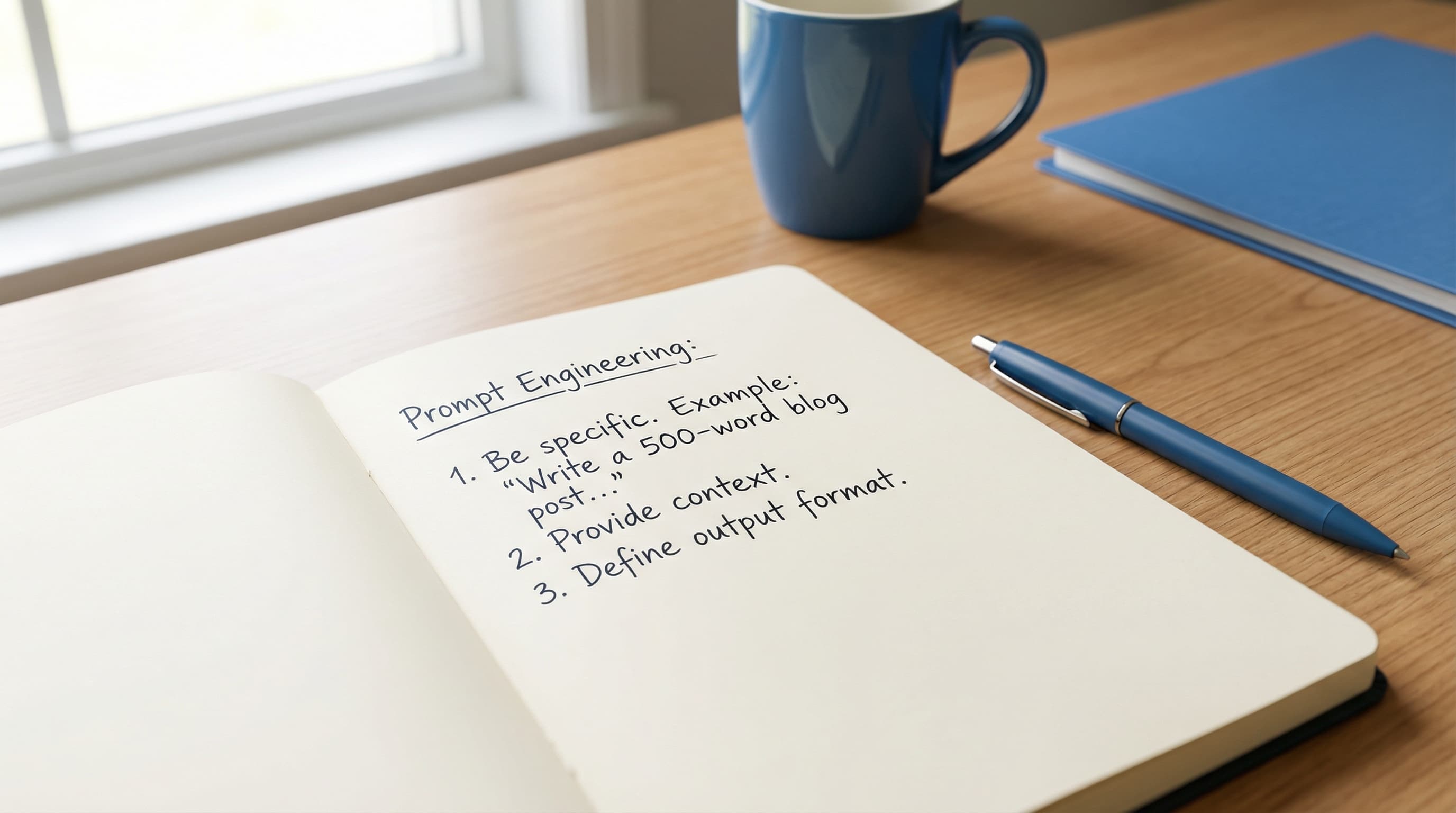
2. Vague or incomplete questions. "Write an email" gives you something very different from a prompt with role, context and goal. The sharper your question, the more useful the answer, and this is often where you gain the most without investing anything. More on that in prompt engineering: how to write prompts that work.
3. Outdated knowledge. Every model has a knowledge cutoff. Current laws and regulations, market prices or news from after that date are unknown to it. For tax, legal or market questions, ChatGPT without a link to live sources is unreliable. Which model has which strengths differs per provider, see ChatGPT vs Copilot vs Claude.
4. Hallucinations. Sometimes a language model invents an answer that sounds convincing but is wrong. That's not a bug but a trait: the model predicts likely text and doesn't look up facts. This risk applies to every language model. For anything that has to be factually right: verify it, or connect the model to a controlled source.
What does that look like in practice?
Three recognisable SMB scenarios:
- The quote. An installation company asks for a quote. ChatGPT delivers neat text with invented prices, because it doesn't know the rate sheet, the suppliers or the warranty terms.
- Customer service. A web shop has complaints answered. The AI promises returns within 30 days while the policy is 14 days. The result: angry customers and needless hassle.
- The regulations. An accountant asks about a current tax rule and gets an answer based on outdated legislation.
The common thread is always the same: the model lacks the right context or the current facts. And every time it's fixable, at a different level.
Start with yourself: write better prompts
Before you connect or build anything, you get the most out of how you ask. A good business prompt almost always has four parts:
- Role: "You're an experienced salesperson at an installation company."
- Context: the relevant facts, such as customer, product, history and the tone you want.
- Task: what exactly you want, for example a follow-up email, a summary or a checklist.
- Boundaries: length, style, and what the model must not do (for example, don't invent amounts).
Compare "Write an email" with "You're a salesperson at an installation company. Write a friendly follow-up of at most 120 words to a customer who received a bathroom renovation quote three weeks ago and hasn't replied. Don't mention amounts." The second gives you usable output straight away. This approach costs nothing and tackles cause 2, and partly cause 1.
The lasting fix: give AI access to your own data
Prompts help, but you're not going to retype your whole rate sheet for every question. For repeatable work you connect the model to your own sources. That's usually done through RAG (retrieval-augmented generation): the AI first looks up the right piece from your documents, CRM or knowledge base and bases its answer on that, instead of on a guess. How that works without uploading your whole company to ChatGPT is covered in how AI gets to know your business.
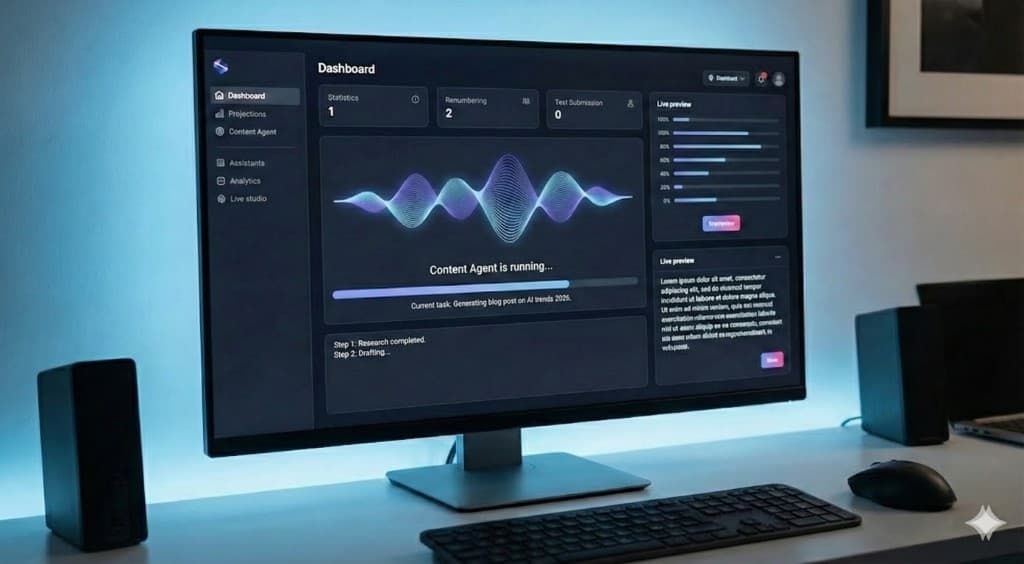
The practical building block is an AI agent: an AI that doesn't only talk but also consults your systems and takes actions. In our own projects we've built, for example, an email responder that handles incoming messages, a system that routes support tickets to the right department automatically, and payment reminders for an accountancy firm. The same principle holds every time: the agent works with verified company data, not with a generic guess.
What does that get you? It varies a lot per process. Teams that feed AI with current product or customer data often win back a lot of time on repetitive work, such as customer questions answered faster and quotes ready in a fraction of the time. Treat percentages you see online as an indication, not a guarantee: your gain depends on your process, your data quality and how often the task comes back.
What do cost and lead time look like?
What does a connection like this cost? The ranges below are indicative for SMBs and meant to give you an order of magnitude, not a quote.
| Approach | What you get | Indicative investment | Lead time |
|---|---|---|---|
| Better prompts + shared prompt library | More usable output straight away, no connection | €0 to a few hours internally | Days |
| Custom GPT or assistant on your own documents | AI that knows your manuals and policies | approx. €1,000 to €4,000 one-off | 1 to 3 weeks |
| Full AI agent connected to CRM and systems | AI that consults live data and takes actions | approx. €5,000 to €20,000+ | 3 to 10 weeks |
You arrange the connection to existing systems, like a CRM such as HubSpot or Pipedrive and accounting packages such as Exact, through integrations. Tools like n8n can help there as an optional workflow layer. Not sure where the biggest gain is? An AI scan maps which processes suit automation, and AI consultancy helps with the wider choice between doing it yourself and having it built. If you'd rather try it yourself first, read building an AI agent yourself.
Which approach fits which task?
Not everything has to be connected. Choose by task:
| Situation | Approach |
|---|---|
| Summarising, brainstorming, a first draft | Basic ChatGPT with a good prompt is enough |
| Customer-specific communication | Connect to CRM and customer data |
| Current regulations or market figures | Connect to live, verified sources |
| Recurring, standardised work | Build a company-specific AI agent |
This matters if you already use ChatGPT but are disappointed with the quality, or if you want AI to work with your data, prices and internal knowledge. ChatGPT isn't bad. A generalist without your context just can never answer like a colleague who knows your business.
What's a sensible next step?
Generic AI gives generic answers, even if it isn't ChatGPT but another AI that doesn't know your data. Companies that bridge that gap do it with AI agents set up around their own processes and data.
Curious where the biggest gain is for you? Make an AI scan or book an intro call.
Frequently asked questions
Short, clear answers so you can decide faster.
Why does ChatGPT give wrong information?
ChatGPT sometimes hallucinates: it generates text that sounds plausible but is wrong. That's because the model predicts likely text instead of looking up facts in a reliable source. So verify anything that has to be right, or connect the model to a controlled data source.
How do I get ChatGPT to give better answers for my business?
Start by asking sharper questions: always give role, context, task and boundaries. For a lasting improvement, connect the model to your business data through an AI agent or a RAG system, so answers are based on your own documents and systems.
Is ChatGPT suitable for customer service in my business?
Only if it's fed with your current product information, returns policy and customer data. Without that connection it gives generic and sometimes wrong answers, such as the wrong returns period.
What's the difference between ChatGPT and a company-specific AI?
ChatGPT is a generalist without access to your data. A company-specific AI agent works with your systems and current data. The underlying language models can be the same; the difference is the link to your knowledge and processes.
Does it cost a lot to make ChatGPT better for my business?
That depends on the approach. Better prompts cost nothing. An assistant on your own documents starts at a few thousand euros, indicatively, and a full agent connection to your systems costs more.