Agent as a Service: Rent AI Agents Instead of Building
 Erwin Berkouwer
An explanation of Agent as a Service as a subscription model for ready-made AI agents, with concrete SME use cases, a comparison against building your own agent or a standalone AI subscription, cost indications, and a checklist covering vendor lock-in and data ownership.
Building your own AI agent takes time and expertise most SMEs don't have. Agent as a Service solves that by delivering a ready-made, managed agent as a subscription.
Why building your own AI agent often goes wrong
Many SME owners keep hearing about AI agents these days. A chatbot that handles customer questions, a system that reads invoices, an assistant that qualifies leads before a salesperson spends time on them.
The problem isn't the promise, it's the execution. Building an agent yourself requires knowledge of large language models, prompting, integrations with your existing software, and, perhaps hardest of all, ongoing maintenance. An agent that works well today might start making mistakes next month because an underlying model changed or an integration broke.
On top of that, an SME with 5 to 50 employees rarely has a dedicated AI engineer on staff. The IT person you do have is already busy with printers, laptops, and the accounting software. An AI agent that doesn't maintain itself becomes an abandoned project within six months.
That's why Agent as a Service (AaaS) is increasingly presented as an alternative: not building it yourself, not just subscribing to a generic AI tool, but taking a working agent that a vendor manages for you.
What exactly is Agent as a Service?
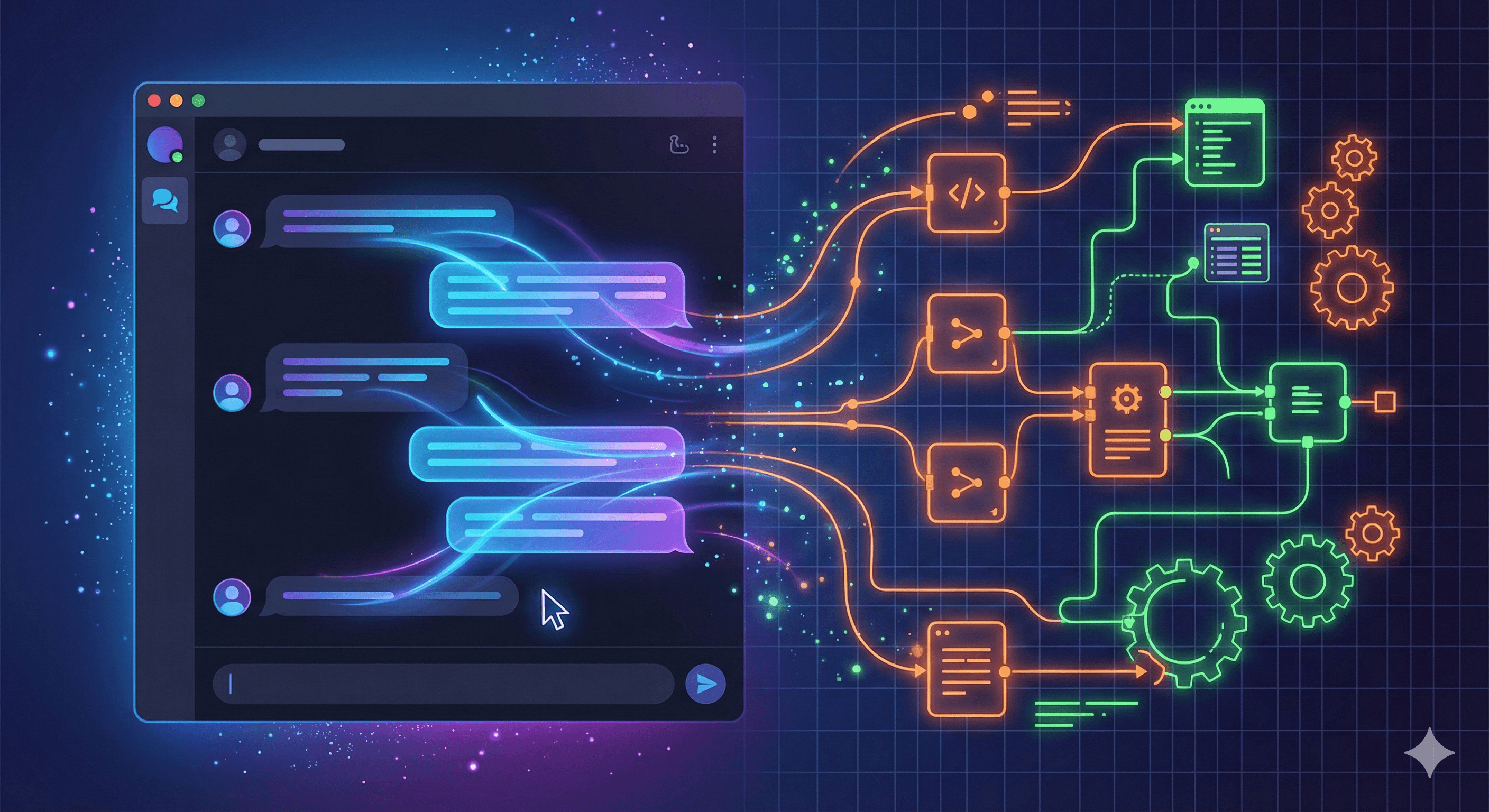
Agent as a Service means you're not buying a software license, you're renting a working AI employee. The vendor builds, hosts, and maintains the agent; you pay a fixed or variable monthly fee and use the result.
The difference with a regular SaaS subscription (like accounting software) is that the agent actively performs work instead of just providing a tool. The difference with building it yourself is that you don't need to assemble a team that writes prompts, picks models, and maintains integrations.
In practice, an AaaS subscription usually looks like this:
- You pay a fixed monthly fee, sometimes supplemented with a per-task price (for example per resolved ticket or per processed invoice).
- The vendor updates the agent when needed, for example when a new language model appears or an integration changes.
- You get a dashboard or report showing what the agent has done.
- Escalation to a human is built in by default for cases the agent can't handle itself.
This model works particularly well for SMEs because the risk and technical burden sit with the vendor, not with you. Read more about how such an AI agent works and which types exist in our overview.
Six concrete applications for SMEs
Agent as a Service isn't an abstract concept. For an average SME, these are the applications that deliver value fastest.
1. Customer service agent
An agent that reads incoming emails and chat messages, answers frequently asked questions directly, and only escalates more complex cases to a staff member. Suited to webshops and service providers with a predictable stream of questions.
2. Lead qualification
The agent reviews incoming requests (via a form or email), asks follow-up questions, and scores the lead before a salesperson gets involved. This prevents salespeople from wasting time on requests that never go anywhere.
3. Invoice processing
An agent that reads incoming invoices, recognizes data, and writes it to the accounting system, with a review step for unusual amounts. This is one of the most requested applications because it saves time without feeling risky.
4. Scheduling and appointment management
The agent takes phone or online appointment requests, checks the calendar, and confirms or proposes an alternative. Useful for service providers like installers, clinics, or consultancies.
5. Internal knowledge agent
An agent that acts as the first point of contact for staff questions: leave policy, internal procedures, common HR questions. This significantly relieves a small HR or office team.
6. Content and marketing support
The agent drafts first versions of social posts, newsletters, or product descriptions based on existing brand voice and past content, ready for a final human check.
Want to know which of these processes would deliver the most value for your business? Our AI scan maps that out in ten minutes. You'll find more examples in our article on five processes SMEs automate with AI agents.
Agent as a Service, building it yourself, or a standalone AI subscription: what fits you?
The choice between these three models determines not just the cost, but also who's responsible when something goes wrong.
| Agent as a Service | Build it yourself | Standalone AI subscription (e.g. ChatGPT Team) | |
|---|---|---|---|
| Setup time | Weeks | Months | Immediate |
| In-house expertise needed | Limited | High (AI/engineering) | Limited |
| Maintenance | Handled by vendor | Handled by you or your partner | N/A (no task execution) |
| Integration with existing software | Often included | Built by you | Usually manual copy-paste work |
| Cost structure | Fixed + per task | High upfront investment, lower ongoing costs | Low, per user per month |
| Best suited for | Recurring, well-defined processes | Highly specific custom needs long-term | Occasional, individual tasks |
| Vendor lock-in risk | Present, depends on contract | Low (you own the code) | Low but delivers no process automation |
Expert tip: don't choose based on the lowest monthly price, choose based on who fixes the problem when the agent makes a mistake. With Agent as a Service, that's contractually the vendor; if you build it yourself, it's you, unless you outsource that to a partner such as AI consultancy.
How do you choose an Agent as a Service partner?
Because AaaS means handing over part of the control, it pays to get a few things clear upfront. These are the questions you should actually ask a vendor.
- Who owns the data the agent processes? Ask explicitly whether customer data, invoices, or conversation logs stay with the vendor, and under what conditions you can export them.
- What happens if you cancel the subscription? Do you take the configuration, prompts, and training data with you, or do you have to rebuild everything from scratch if you switch? This is the core of vendor lock-in.
- Which underlying AI model is used, and can it change? A vendor that silently switches models can change your agent's behavior without you noticing.
- How does escalation to a human work? Ask for concrete examples of situations where the agent deliberately stops and hands off.
- Which integrations are available out of the box? For Dutch SMEs this is often the deciding factor: can the agent connect to Exact Online, AFAS, or HubSpot out of the box, or does that require custom work? See what such an integration looks like in practice in our article on connecting Exact Online with AI.
A realistic implementation timeline
A carefully set up AaaS project usually runs through a few phases:
- Week 1-2: intake and process mapping, identifying required integrations.
- Week 3-4: initial configuration and test with a limited dataset or audience.
- Week 5-6: controlled rollout with human review of the first results.
- From week 7: full rollout, with periodic performance evaluation.
This timeline is an and depends heavily on how many systems need to be connected and how clean your data already is.
What does Agent as a Service cost for an SME?
Pricing in this market varies significantly by vendor, process, and volume, so the figures below are explicitly an, not fixed rates.
- A simple agent for a single process (for example one customer service scenario): a few hundred euros per month.
- An agent with multiple integrations (for example CRM plus accounting): higher, depending on volume and complexity.
- One-time setup costs for intake, configuration, and integration: often a one-off fee on top of the monthly subscription.
Always compare this against the human hours your process currently costs. A rough breakdown of what an AI agent delivers relative to its cost can be found in our article on what an AI agent costs.
When is Agent as a Service not (yet) the right choice?
Agent as a Service isn't a universal solution. In a number of situations, it's smarter to choose something else.
- Highly specific custom processes. If your process is unique to your market and doesn't resemble a standard pattern, setting it up with an AaaS vendor can end up costing as much as building it yourself, without the benefit of full control.
- Extremely high volume over the long run. At very high, predictable volumes, the per-task price of an AaaS subscription can eventually become more expensive than an owned, self-managed solution., run the numbers before you decide.
- Strict requirements around data residency or source code ownership. Some sectors (for example healthcare or financial services) have requirements where full control over infrastructure outweighs convenience.
- You want to sell the agent as part of your own product. In that case, owning the underlying technology is usually a requirement, not a nice-to-have.
In these cases, a conversation with an independent AI advisor is more valuable than signing a subscription right away, because the right choice depends heavily on your specific situation.
Next step
Whether Agent as a Service, building it yourself, or a standalone AI subscription fits best depends on your processes, your systems, and your team. Want to map that out concretely and without obligation? Start with our free AI scan or schedule an introduction via contact.
Frequently asked questions
Is Agent as a Service the same as a chatbot subscription?
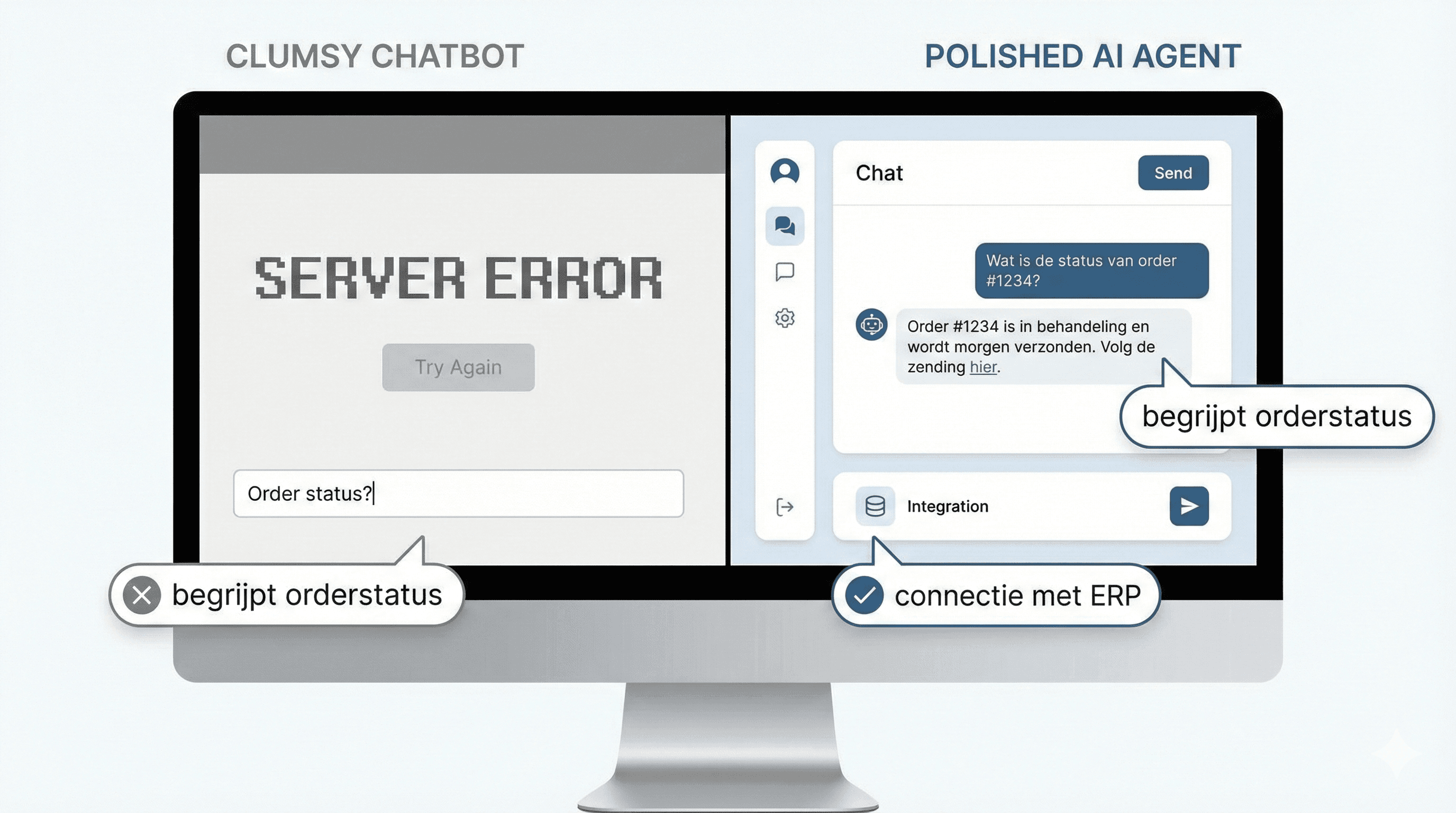
No. A chatbot answers questions based on fixed texts or simple rules. An AI agent in an AaaS model actually takes actions: looking up data, updating systems, making decisions within preset boundaries, and only escalating once it falls outside those boundaries.
How long does it take to get an agent operational?
This varies by process and number of integrations, but expect several weeks between intake and full rollout. Simple, well-defined processes move faster than agents that need to interact with multiple systems at once.
What happens to our customer data when we use an agent?
That depends entirely on the vendor and the contract. Always ask explicitly where data is stored, who has access to it, and whether you can take the data and configuration with you if you cancel. Get this in writing before you sign, not afterward.
Can we later switch to our own, self-built agent?
Yes, but it's easier if you arrange for that upfront. When signing an AaaS subscription, ask about export options for prompts, workflows, and training data, so a later switch doesn't mean starting from zero.
Does Agent as a Service also work with our existing software like Exact or HubSpot?
With most serious vendors, yes, but the depth of the integration varies significantly. Ask for a concrete demo of the integration with your specific system before signing a contract, not just a list of logos on the website.
Veelgestelde vragen
Korte, heldere antwoorden die je helpen sneller beslissen.
Is Agent as a Service the same as a chatbot subscription?
No. A chatbot answers questions based on fixed texts or simple rules. An AI agent in an AaaS model actually takes actions: looking up data, updating systems, making decisions within preset boundaries, and only escalating once it falls outside those boundaries.
How long does it take to get an agent operational?
This varies by process and number of integrations, but expect several weeks between intake and full rollout. Simple, well-defined processes move faster than agents that need to interact with multiple systems at once.
What happens to our customer data when we use an agent?
That depends entirely on the vendor and the contract. Always ask explicitly where data is stored, who has access to it, and whether you can take the data and configuration with you if you cancel. Get this in writing before you sign, not afterward.
Can we later switch to our own, self-built agent?
Yes, but it's easier if you arrange for that upfront. When signing an AaaS subscription, ask about export options for prompts, workflows, and training data, so a later switch doesn't mean starting from zero.
Does Agent as a Service also work with our existing software like Exact or HubSpot?
With most serious vendors, yes, but the depth of the integration varies significantly. Ask for a concrete demo of the integration with your specific system before signing a contract, not just a list of logos on the website.