What Is Computer Vision? A Business Guide
 Erwin Berkouwer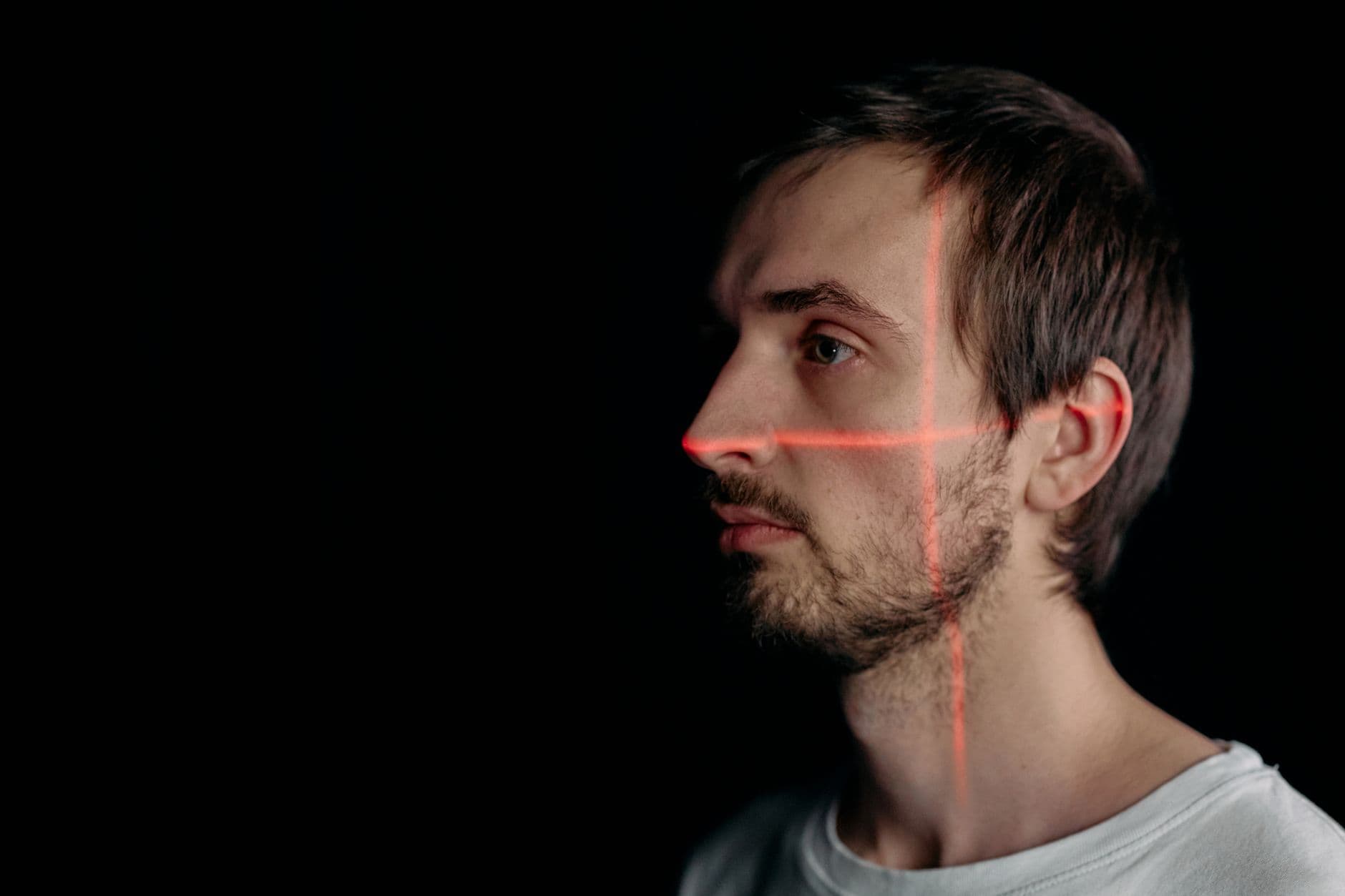
What is computer vision?
Computer vision is a branch of artificial intelligence that lets machines "see" and interpret images and video: recognising, counting, measuring, classifying objects, or flagging anomalies. The system takes a photo or video frame as input and produces structured information as output, for example "this is a box, it's tilted, this label is missing."
For businesses, computer vision is especially interesting because it takes over work currently done by the human eye: quality control, counting, safety checks, and visual inspections.
How does computer vision work?
Modern computer vision is based on deep learning, specifically convolutional neural networks (CNNs) that learn to recognise patterns in image pixels. The model is trained on large sets of labelled images, after which it can independently recognise similar patterns in new images.
The most common tasks are:
- Classification: what's in the photo? (for example: product A or product B)
- Object detection: where in the image is something located? (with a bounding box around each object)
- Segmentation: which exact pixels belong to which object?
- Anomaly detection: does this image deviate from the norm?
Computer vision is not a standalone "camera system." The camera only supplies the images; the intelligence lies in the model that interprets them. The same camera can produce completely different information depending on which model processes its feed.
Why does this matter for SMEs?
Computer vision is often associated with large factories, but its applications are just as relevant for smaller organisations:
| Sector | Application |
|---|---|
| Manufacturing and assembly | Automatic quality control on the production line |
| Wholesale and logistics | Automatically counting and scanning inventory |
| Retail | Detecting empty shelves or misplaced products |
| Construction and technical trades | Visual inspection of installations or structures |
| Hospitality and food | Checking packaging, labelling, or expiry dates |
The big advantage for smaller businesses is that computer vision models are now available through ready-made APIs. You don't need to train your own model to get started.
A second reason this matters: the cost of camera hardware and computing power has dropped considerably in recent years, making applications that used to be feasible only for large industrial players now affordable for a business with a handful of employees. The barrier today lies less in the technology itself and more in clearly defining which visual problem you actually want to solve.
A concrete example
A wholesaler of building materials receives pallets of products daily. An employee photographs each pallet, and a computer vision system automatically counts the number of boxes, identifies the product type from the packaging, and compares this against the packing slip. Discrepancies are flagged immediately, instead of only surfacing during a manual check later on.
When to use it, and when not to
Use it when:
- Visual checks currently happen manually and repeatedly (counting, inspecting, verifying)
- There are enough example images of both correct and incorrect situations
- Errors caused by human fatigue or inconsistency are a real problem
Don't use it when:
- Visual variation is too large and unpredictable to model
- Too few training images are available for the specific situation
- A simple sensor or rule-based check already does the job
Related concepts
Computer vision overlaps with OCR (recognising text within images) and is one of the building blocks of multimodal AI, where images are combined with text or speech. Where OCR focuses specifically on text, computer vision focuses on objects, shapes, and visual patterns in general.
Want to know if computer vision could help your processes? An AI scan maps where visual checks currently cost time, and whether automation is feasible. For implementation support, see AI consultancy, and AI agents shows how visual input can be processed within a running business process.
Frequently asked questions
Do I need expensive cameras for computer vision?
No, in many cases a regular smartphone camera or a standard IP camera is enough. Model quality matters more for accuracy than camera resolution, though good lighting still helps.
Do I need to train my own computer vision model?
For many applications you can start with existing general models or specialised providers already trained on similar tasks. Custom training is mainly needed for very specific or unique situations.
How accurate is computer vision in practice?
This depends heavily on the task and the quality of the training data. For standardised tasks like counting or classifying, accuracy can be high; for complex or variable situations, testing on your own material is necessary.
What does it cost to deploy computer vision for a small business?
This varies a lot by application and scale. Ready-made APIs are often affordable to start with; custom solutions for specific situations require a larger investment.
Frequently asked questions
Short, clear answers so you can decide faster.
Do I need expensive cameras for computer vision?
No, in many cases a regular smartphone camera or a standard IP camera is enough. Model quality matters more for accuracy than camera resolution, though good lighting still helps.
Do I need to train my own computer vision model?
For many applications you can start with existing general models or specialised providers already trained on similar tasks. Custom training is mainly needed for very specific or unique situations.
How accurate is computer vision in practice?
This depends heavily on the task and the quality of the training data. For standardised tasks like counting or classifying, accuracy can be high; for complex or variable situations, testing on your own material is necessary.
What does it cost to deploy computer vision for a small business?
This varies a lot by application and scale. Ready-made APIs are often affordable to start with; custom solutions for specific situations require a larger investment.