Machine Learning for SMEs: 5 Applications That Actually Work (With Numbers)
 Erwin Berkouwer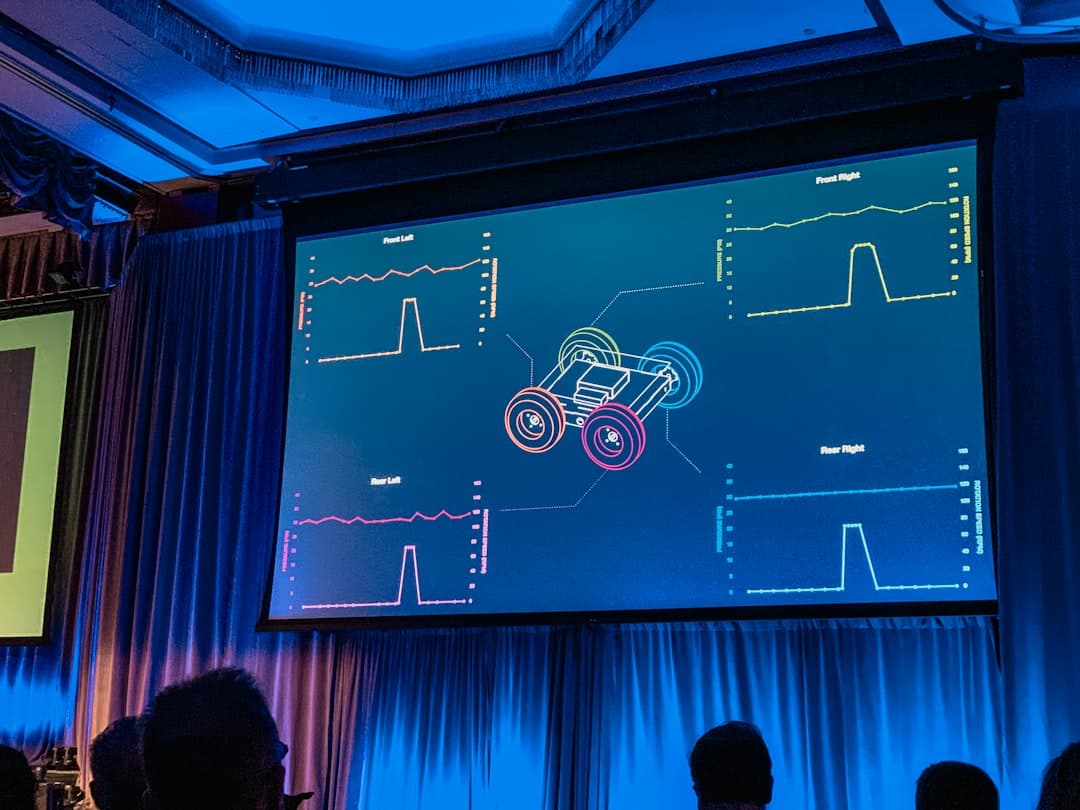
SMEs that don't use machine learning overpay an average of €47,000 per year. Discover 5 proven ML applications with concrete ROI figures and implementation costs.
What is your competitor earning that you're leaving on the table?
SMEs that don't use machine learning overpay an average of €47,000 per year for manual work compared to competitors who do. That's the sum of duplicate data entry, missed inventory opportunities, and customer service that absorbs your team — while the competitor lets the system run.
Meanwhile, almost every entrepreneur asks themselves: is machine learning something for big corporations, or also for a business like mine?
The answer: it's now available to you — and it's much more affordable than you think.
What is machine learning (without the jargon)?
Machine learning is software that recognizes patterns in your business data and gets smarter from use. Not a system with fixed rules, but software that learns from what already exists: your invoices, customer history, inventory movements, service conversations.
The difference from regular automation:
| Regular Automation | Machine Learning | |
|---|---|---|
| Works with | Fixed rules | Patterns in data |
| Gets better with use? | No | Yes |
| Can handle exceptions? | Poorly | Well |
| Example task | Forward invoice | Categorize and verify invoice |
In short: automation does the routine work. Machine learning does the thinking.
Why act now?
Only 13.8% of SMEs actively use machine learning in business processes (CBS, 2025). That sounds like a warning, but it's also an opportunity: whoever starts now leads 86% of the competition.
Concrete results reported by SMEs:
- 30–50% time savings on administrative processes
- 40–60% fewer errors in document processing
- Average 5.6 hours per employee saved per week
- Payback period: 6–18 months with focused deployment
An office of 5 people each saving 5.6 hours per week? That's almost one extra full-time employee — without extra salary costs.
5 Machine learning applications that work for SMEs
1. Intelligent inventory optimization
Problem: You order by feeling or historical averages. Result: too much of one item, stockouts of another — with lost sales as a consequence.
Solution: A forecasting model learns from your sales history, seasonal influences, lead times, and external factors like holidays and weather data.
Result: A Dutch web shop reduced stockouts by 40% and excess inventory by 25% after implementing ML-based inventory planning. Machine learning algorithms can forecast demand per SKU with more than 85% accuracy.
Tip: Start with demand forecasting for your top 20 sellers. That delivers immediate results and costs the least to implement.
2. Automatic invoice processing
Problem: Processing invoices manually costs an employee 3–5 minutes each. With 200 invoices per month, that's 10–17 hours of pure data entry — every month again.
Solution: Intelligent Document Processing (IDP) recognizes supplier names, amounts, VAT numbers, and booking codes — even with unusual layouts and handwritten fields.
Result: Accuracy above 95%, processing time drops 40–60%. For 200 invoices per month, that means 8–10 hours saved. Direct integration available with Exact Online, AFAS, and Twinfield.
Read more about integrating AI with Exact Online and AFAS.
3. Intelligent customer service
Problem: 60–70% of your customer questions are repetitive. Same questions about delivery times, return procedures, and order status — handled daily by your most expensive employees.
Solution: An AI agent answers first-level questions 24/7 based on your knowledge base. Complex questions automatically escalate to an agent — with context included.
Result: 54% of SMEs with an AI chatbot save at least 10 hours per week on customer questions (Salesforce, 2025). That's 40 hours per month — easily a full workweek.
See how you can automate customer service with AI agents.
4. Churn prediction
Problem: You see customers leave, but you don't know which customer goes next — until it's too late.
Solution: A churn model analyzes behavioral patterns: purchase frequency, support interactions, payment history. It gives a risk score per customer so you can intervene proactively with a targeted action.
Result: Companies using churn models reduce customer attrition by an average of 15–25%. With an average customer value of €2,000 per year and 50 at-risk customers, that's €15,000–€25,000 of annual revenue protected.
5. Predictive maintenance
Problem: Machines break at the wrong time. Emergency repairs cost 3–5 times more than planned maintenance — plus the productivity damage from unplanned downtime.
Solution: Sensors measure temperature, vibration, and energy consumption. An ML model predicts which machine needs maintenance when, before a breakdown occurs.
Result: Manufacturing SMEs report 20–35% fewer unplanned shutdowns and 15–25% lower maintenance costs after implementation.
What does machine learning implementation cost for SMEs?
| Application | One-time Setup | Monthly Costs | Payback Period |
|---|---|---|---|
| Invoice processing | €2,000–€5,000 | €200–€500 | 3–6 months |
| Inventory optimization | €3,000–€10,000 | €300–€800 | 6–12 months |
| AI customer service | €2,500–€8,000 | €200–€600 | 4–9 months |
| Churn prediction | €4,000–€12,000 | €400–€1,000 | 9–18 months |
| Predictive maintenance | €5,000–€20,000 | €500–€1,500 | 12–24 months |
Through WBSO and MIT R&D AI, you can get up to 50% subsidy as an SME on AI and data science projects, up to €350,000. This makes the business case considerably more attractive.
Frequently Asked Questions
Do I need a data scientist for machine learning?
No. Most no-code and low-code ML platforms are designed for non-technical users. An implementation partner handles the initial setup; afterward you manage the system yourself.
Do I already have enough data to start?
For most applications, you need 12–24 months of historical data. Invoice processing works from day one. For inventory forecast, you ideally have at least 2 years of sales data.
How long does an implementation take?
A first proof of concept takes 4–8 weeks. A production implementation takes an average of 3–6 months, depending on complexity and data quality.
What if my employees don't want to use it?
Involve your team early in the process. Explain which tasks disappear (the annoying, repetitive ones) and which become more interesting. Companies that handle this well report higher employee satisfaction after implementation.
Are there risks with machine learning?
The biggest risks are poor data quality, choosing the wrong use case, or starting too big. Minimize this by starting small with a clearly defined application with measurable outcomes.
Where do you start?
Not with a grand plan, but with a process.
Choose the process where your team currently spends the most time on manual work. That's your starting point. Measure the current situation in hours, errors, and costs. Implement a pilot over 8 weeks. Measure again.
The results will speak for themselves.
Want to know which ML application has the most impact for your business? Schedule a free strategy session with one of our AI consultants. We analyze your processes and give concrete advice — without sales pitch.