Prompt Engineering: The Art of Effective AI Prompts
 Erwin Berkouwer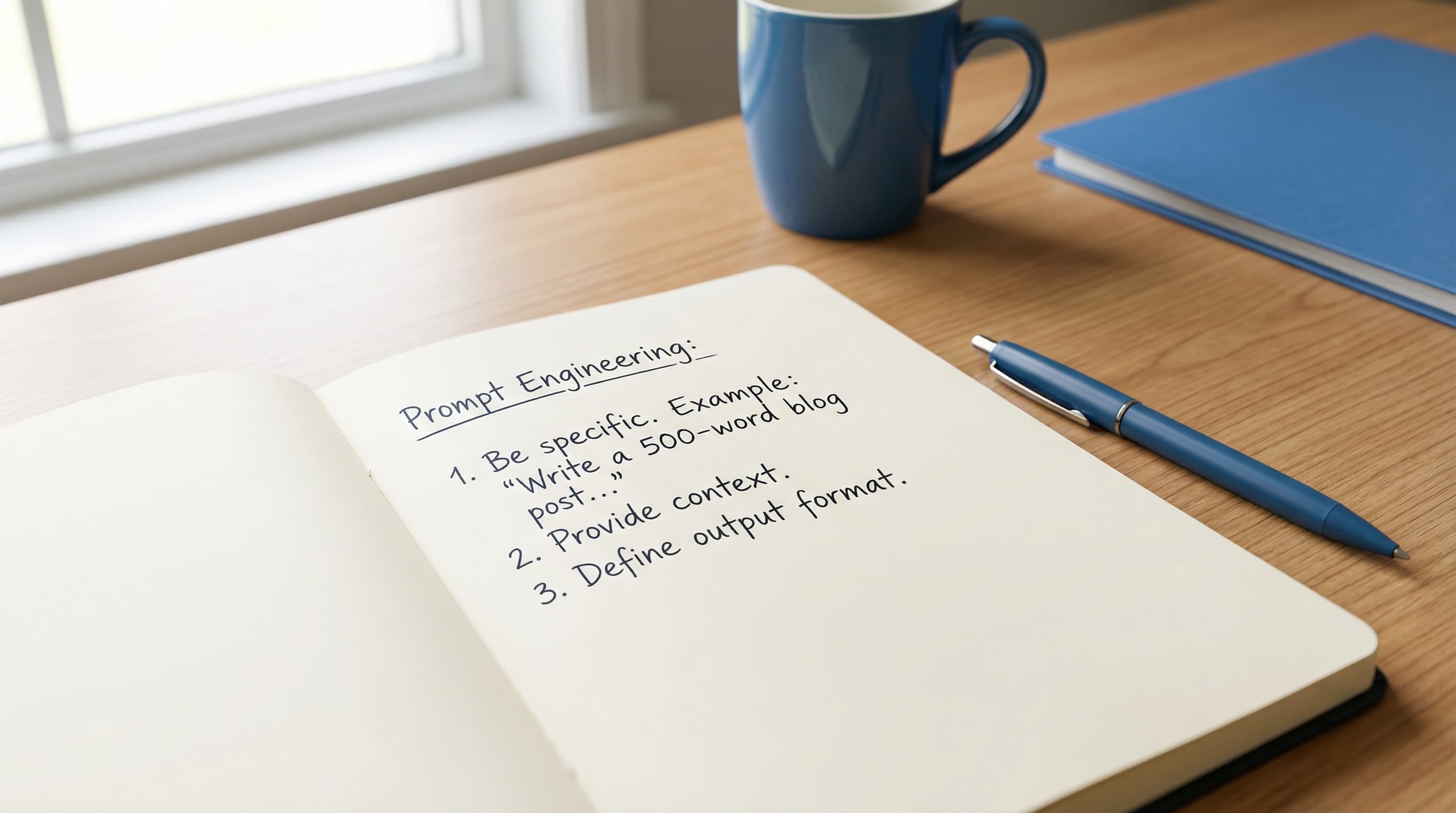
Companies without a prompt strategy waste 30-50% of their AI investment. Learn the 5 building blocks of an effective prompt with concrete templates for every department.
Companies that deploy AI without a clear prompt strategy waste an average of 30 to 50% of their AI investment. Not because of bad software — but because of unclear instructions. The AI does something, but not what you meant. You adjust, try again, and after three rounds you get something usable. Again and again.
Prompt engineering sets the foundation for AI that delivers the right result directly — the first time. In this article, you'll learn the five building blocks of an effective prompt, see concrete examples for your business, and discover how prompt templates make your team structurally faster.
What is Prompt Engineering?
A prompt is the instruction you give to an AI tool. Prompt engineering is the art of formulating that instruction so the AI understands exactly what you want.
Think of it as a briefing for a new employee. Say "write something about our product" and you get something vague. Say "write a LinkedIn post of 150 words for directors in logistics, focused on our delivery speed, ending with a question" and you get something publishable.
AI works the same way — except it responds literally to what you give it. The more specific your prompt, the better the result.
Why This Is Critical for Your Business
SMEs invest an average of 3,000 to 15,000 euros per year in AI tools in 2026. If your employees use those tools without a prompt strategy, you're paying for output you have to redo twice.
The numbers are concrete:
- 30–50% of AI work time is lost on poorly formulated prompts (revision, post-processing, retrying)
- Teams working with prompt templates save an average of 20 hours per employee per month
- A team of 5 content employees that saves 2 hours per week through better prompts realizes 2,000 euros per month in time savings — with AI costs of 150 euros/month, that's a ROI of 1,233%
Core point: You're already paying for the AI. Prompt engineering determines how much you actually get out of it.
The 5 Building Blocks of an Effective Prompt
Every good prompt contains five elements. You don't always need all of them, but the more you include, the better the result.
| Building Block | What It Does | Example |
|---|---|---|
| Role | Gives the AI a perspective | "You're an experienced B2B copywriter" |
| Context | Limits the playing field | "For a SME in healthcare" |
| Task | Specifies the desired result | "Write an email of 200 words" |
| Examples | Shows what 'good' looks like | "In the style of this fragment: [example]" |
| Format | Structures the output | "Use bullets, no jargon, end with CTA" |
Bad vs. Good — A Concrete Example
Bad:
"Write a newsletter about our new service."
Good:
"You're a B2B copywriter. Write a newsletter of 300 words for directors of transport companies (50–200 employees). Subject: our new scheduling automation that yields 40% less manual scheduling. Tone: professional but direct. Structure: problem → solution → results → CTA for demo."
The second example delivers publishable text. The first creates work.
Practical Examples per Department
Marketing & Content
Prompt template for blog intro:
"You're a content strategist writing for [target audience]. Write a 3-sentence intro for a blog about [topic]. Start with a statistic or a relatable problem. Never start with a question."
Result: Consistent tone across all writers, fewer revision rounds.
HR & Recruitment
Prompt template for job description:
"Write a job description for a [function] at [company name]. Company culture: [description]. Must-haves: [list]. Tone: human and direct, no corporate language. Max 350 words. End with a concrete application step."
Result: Job descriptions ready 2x faster and aligned with company culture.
Finance & Reporting
Prompt template for summary:
"Analyze the following sales data and provide an overview in three bullets: what went well, what needs attention, and one concrete recommendation. Write for a director with 5 minutes. [data here]"
Result: Management summaries in seconds instead of hours.
Customer Service
Prompt template for response writing:
"You answer questions on behalf of [company name]. Tone: helpful, professional, not formal. Write an answer to the following customer question: [question]. Use maximum 4 sentences. End with a concrete next step."
Result: 60–80% of standard questions answered automatically with consistent tone.
Prompt Templates for Your Team
Prompt engineering becomes truly powerful when it works teamwide. One good prompt everyone uses is better than ten employees each trying their own approach.
How to set it up:
- Inventory the 5 most repeated tasks where AI is used (emails, summaries, content, analyses, reports)
- Write a template for each task with the five building blocks
- Test with three employees — adjust based on feedback
- Document in a shared file (Notion, SharePoint, or Google Docs)
- Evaluate monthly — good prompts grow with your business
Tip: Add a "forbidden" rule to each template. For example: "Never use jargon" or "Never start with 'I' or 'We.'" This prevents the most common AI mistakes in one sentence.
From Prompt to AI Agent: Automation at the Next Level
A good prompt makes your AI use better. An AI agent — driven by a series of prompts — automates it completely.
Imagine: you currently write a customer service summary manually every week based on tickets. With an AI agent, you set once which prompts are used, which data is pulled, and what format the result should have. After that it runs automatically — without anyone needing to look at it.
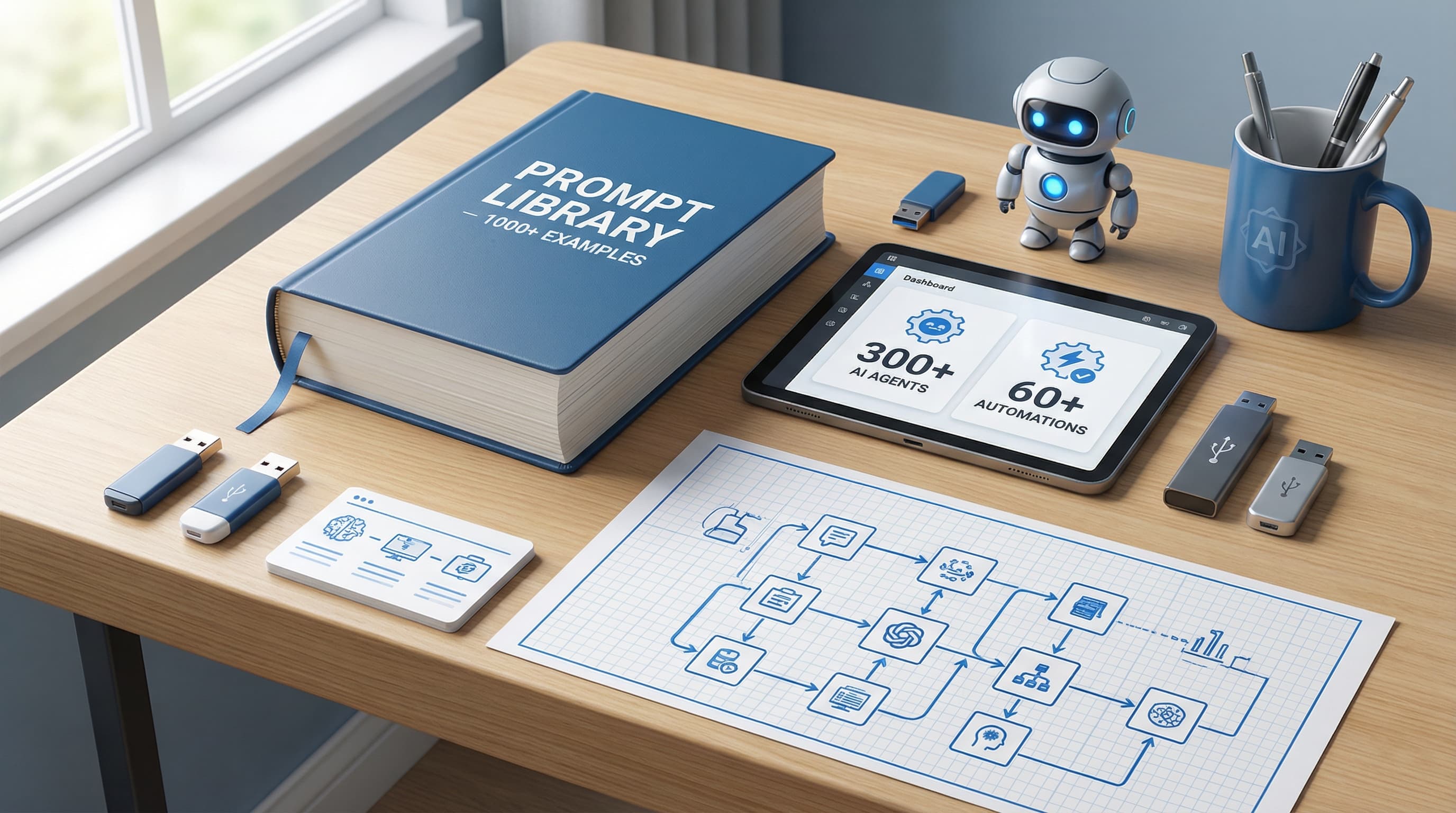
At UnifyAI, we help SMBs build these kinds of agents: from smart prompt templates to fully automated workflows that seamlessly connect to your existing systems.
Frequently Asked Questions
Do I need to learn prompt engineering or is there software for it?
Good tools (like ChatGPT, Claude, or Copilot) respond better to better prompts — regardless of platform. Prompt engineering is a skill, not software. It takes an afternoon to learn the basics and a few weeks to automate in templates. At UnifyAI, we help companies get this sorted quickly.
Does prompt engineering also work for AI agents and automated processes?
Yes — AI agents are fundamentally based on prompts. The better the underlying instructions, the more reliably the agent functions. Bad prompts in an agent lead to errors at scale. Good prompts in an agent lead to reliable automation at scale.
How much time does it take to create prompt templates for my team?
For a team of 5–20 employees, a first set of 5–10 templates takes half a workday. Time savings begin immediately: teams report an average 20% fewer revisions after the first week. After a month, the templates have grown into a full internal knowledge base.
What You Can Do Now
You now have the five building blocks, concrete examples per department, and an approach for team implementation. The next step: choose one recurring task where you or your team use AI, and write a template for it using the building blocks from this article.
Want help building prompt templates or automating processes with AI agents? Schedule a free conversation with one of our consultants — with no obligations, with immediately useful advice.