Voice AI in SME: so you call (and get called) by your AI assistant
 Erwin Berkouwer
Voice AI is production-ready in 2026: AI agents answer phone calls, schedule appointments and do follow-ups. What really works now and what is hype?
In 2024, Voice AI was mostly a demo. In 2026, it is production-ready for specific use cases. But not everything that sounds like science fiction works now — and not every conversation should be handled by AI.
What Voice AI can do in 2026
Filter incoming calls
AI picks up, asks about the nature of the call, and routes to the right person or handles simple questions directly:
- "What are your opening hours?"
- "Can I change my appointment?"
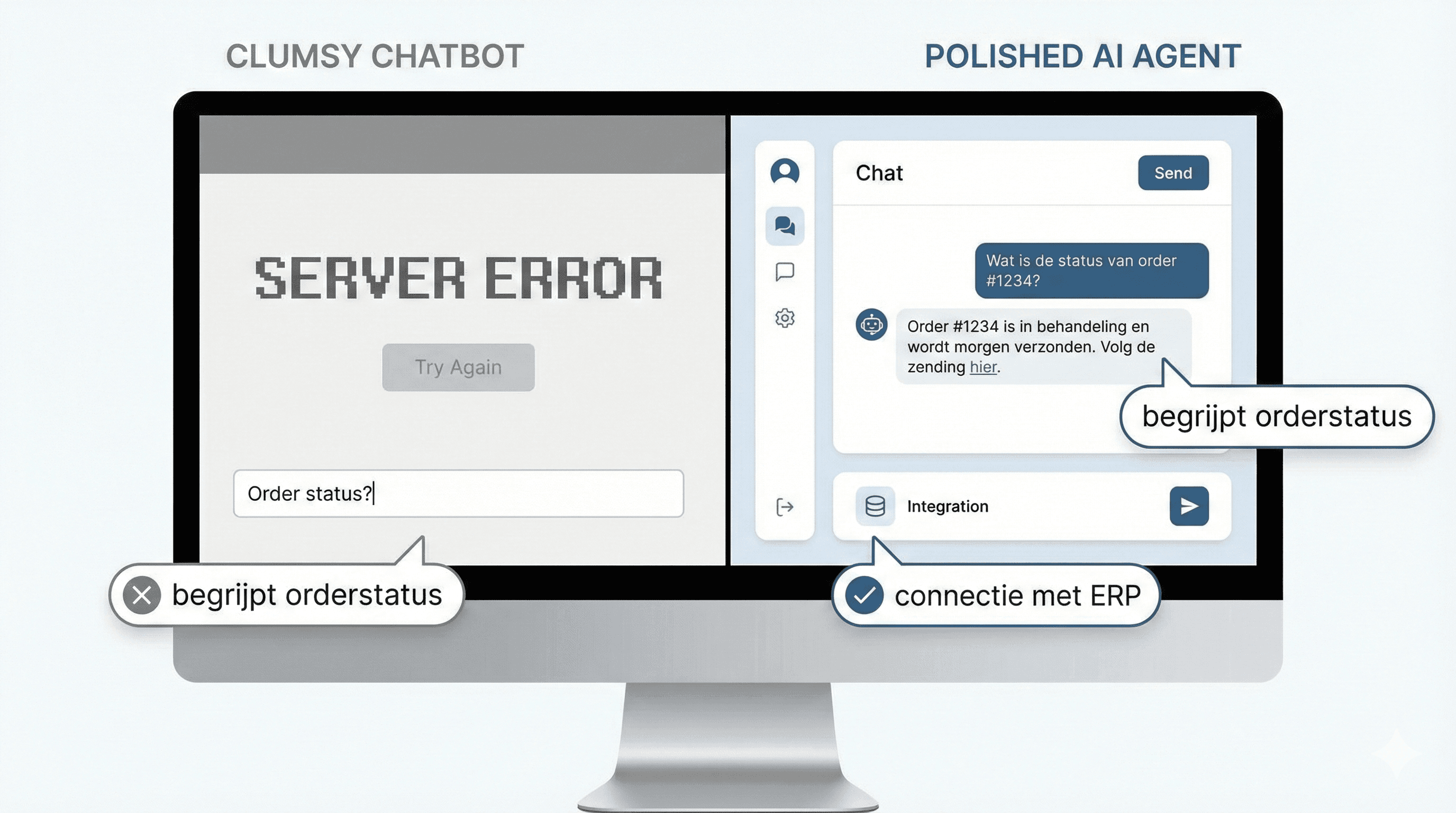
- "What is my order status?"
Result: 30-60% of incoming calls no longer need to reach a human.
Outgoing follow-ups
For reminders about appointments, confirmation of quotes, or customer satisfaction checks: AI calls, has a short conversation, and logs the result.
Schedule appointments
An AI secretary asks about availability, checks your calendar, and schedules. Works especially well for standard appointments (intakes, consultations, demos).
Multilingual support
Modern Voice AI speaks Dutch, English, German and French well. For export-oriented SMEs, a direct saving on multilingual staff.
What (still) doesn't work well
- Complex consultative conversations (sales discovery, problem solving)
- Emotionally charged calls (complaints, resignations)
- Domain-specific jargon without extensive training
- Long conversations (>10 minutes) with multiple topics
<!-- money-link:auto -->
What does this mean for your business?
Take the free AI scan for a prioritized list of opportunities, or have a no-strings chat with your dedicated AI advisor.
Tooling in 2026
Popular platforms for SME:
- Vapi, Bland, Retell: developer platforms for custom AI calls
- Synthflow, AI Voice Lab: no-code tools for simple use cases
- Microsoft Copilot Voice, OpenAI Realtime: enterprise-grade
For SMEs, no-code works well with standardized scenarios, custom development for specific needs.
Implementation steps
Step 1: Choose one use case
Not everything at once. Start with:
- Incoming first-line filter
- Schedule appointments
- Outgoing reminders
Step 2: Write the "playbook"
What should AI say? What if the caller asks something outside scope? When do you escalate to a human?
Step 3: Train on your context
- Products/services in 1-2 sentences
- Tone of voice
- Frequently asked questions + answers
- Escalation keywords ("I want to speak to someone")
Step 4: Test with colleagues
Call yourself 50 times with variations. How well does AI handle calls? Where does it struggle?
Step 5: Go live with monitoring
- Listen to 5-10 calls a week in review
- Improve prompts and knowledge base
- Increase AI handling percentage over weeks
Costs and timeline
- One-time: €3,000 - €15,000 (depending on use case and integrations)
- Monthly: €0.05-€0.30 per call minute + platform fee
- First working implementation: 3-6 weeks
An SME that receives 500 incoming calls per day can have AI handle 100-200 of them automatically — €5,000-€15,000 per month in savings.
Privacy and transparency
Important points for SMEs:
- Identification: mention at start that it's an AI
- Recordings: ask permission for recording
- Retention periods: don't keep recordings longer than necessary
- EU hosting: choose platforms with EU data centers
- GDPR: personal data requires a DPA with your vendor
Conclusion
Voice AI is production-ready in 2026 for specific SME applications — especially filtering, scheduling and reminders. For complex conversations, humans remain primary. Start with one scenario, communicate transparently with customers, and measure both quality and cost.