AI Agents: Explanation, Types and Use for SMEs
 Erwin Berkouwer
AI agents save SME employees 8-15 hours per month. Learn what they are, which five types exist and how to deploy them — with ROI figures.
Every week you don't deploy AI agents, your competitor gets further ahead. Companies that have already started save an average of 8 to 15 hours per employee per month on repetitive work. Customers are helped faster, invoices processed faster and leads followed up faster — without hiring more people. This article explains what AI agents are, which types exist and how you can deploy them today.
What is an AI agent?
An AI agent is software that independently performs tasks to achieve a goal. The big difference from a regular chatbot: a chatbot gives one answer to one question. An AI agent plans multiple steps, uses tools and makes decisions until the goal is reached.
Think of it as the difference between an information desk and a personal assistant. The desk answers questions. The assistant makes it happen for you: they book the appointment, send confirmation, remind you and follow up if you don't respond.
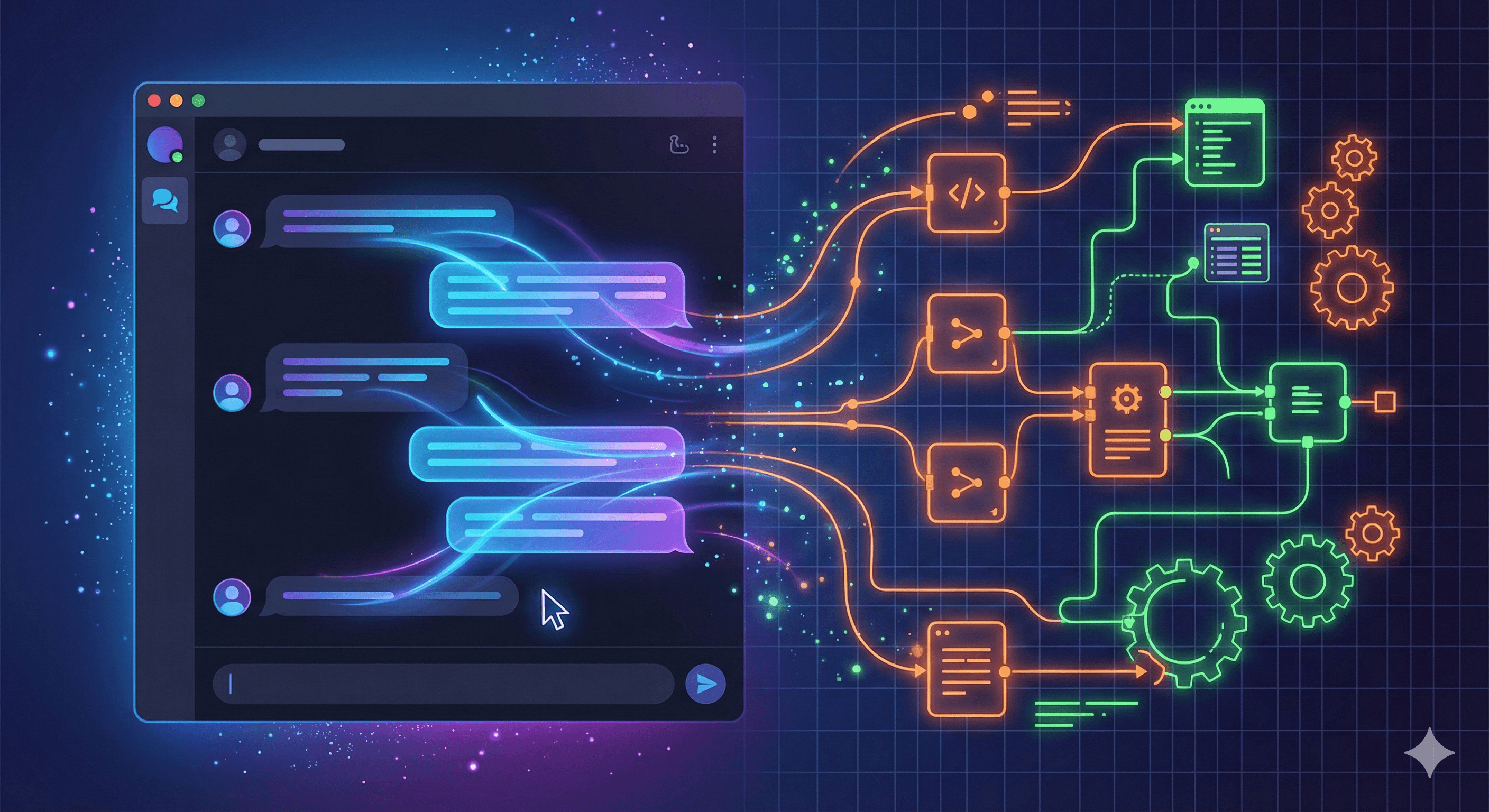
In practice it works like this: a customer sends a complex question to your service mailbox. A chatbot gives a standard answer. An AI agent reads the question, looks up the order details in your system, drafts a personalized answer and automatically creates a follow-up task in your CRM — within seconds, without you doing anything.
Large organizations like JPMorgan Chase are already saving 36,000 hours of legal work per year with AI agents. For SMEs, the benefits are just as concrete, just on an appropriate scale.
What types of AI agents are there?
Not every AI agent works the same. The five most common types differ in complexity and application area:
| Type | How it works | Suitable for |
|---|---|---|
| Conversational agent | Holds conversations and answers questions | Customer service, internal FAQ |
| Task agent | Completes one specific task entirely | Email processing, data entry |
| Process agent | Coordinates multiple steps in a workflow | Invoicing, customer onboarding |
| Research agent | Searches, analyzes and summarizes | Market research, reports |
| Multi-agent system | Multiple agents work together as a team | Complex, cross-departmental processes |
For most SMEs, a task agent or conversational agent is the starting point. Low investment, quick to implement, fast payback. As confidence grows, companies expand to process agents and multi-agent systems. The average SME that starts with one task agent switches within 6 months to at least three automated processes.
Check out our AI agents page for a complete overview of possibilities by type and sector.
Concrete applications for SMEs
AI agents are not science fiction. SMEs are using them every day now:
Transport & logistics — less manual planning work
A transport company with 45 employees automated route planning and customer statuses via an AI agent linked to their planning system and CRM. Result: 3.5 hours less administrative work per day, a 94% reduction in missed status updates and drivers who always have up-to-date information without phone contact.
Retail & e-commerce — faster customer service
A web shop with 12,000 orders per month connected a conversational AI agent to their service mailbox. The agent now handles 72% of all questions independently — return information, order status, delivery times. Saving: €2,800 per month in customer service costs, with a higher customer satisfaction score.
Professional services — invoice processing automated
An accounting firm implemented a process agent for invoice processing. Processing time per invoice: from 4 minutes to 28 seconds. That's an 88% time saving per invoice, freeing up the team to do advisory work that really adds value for clients.
Want to know which applications work best for your sector? Check out our use cases or discover how we connect AI agents to your existing systems via our integrations page.
How do you implement AI agents at UnifyAI?
UnifyAI implements AI agents for SMEs in a proven three-step process:
Step 1 – Process analysis (weeks 1-2)
We map your processes and identify tasks with the highest time savings and lowest implementation risk. On average, we find two to three processes suitable for automation in the first week alone. Cost of this analysis: free with a pilot project.
Step 2 – Build and integrate (weeks 3-5)
We build the agent and integrate it with your existing systems — from your ERP and CRM to your email platform and accounting software. No data migration projects, no new software your team has to learn. The agent works within your existing infrastructure.
Step 3 – Activate and monitor (week 6+)
The agent goes live. We actively monitor the first two weeks and adjust where needed. Your team gets a practical two-hour training. On average our customers see 150 to 300% ROI on their pilot project after 90 days.
Companies that start with one automated process typically scale to three or more within six months. The first step is always the hardest — and the cheapest.
Frequently asked questions
What's the difference between an AI agent and a chatbot?
A chatbot gives one answer to one question, based on pre-written text or a single AI model. An AI agent executes an entire process: it looks up information, makes decisions and takes actions across multiple systems. An agent works like an employee completing a task; a chatbot works like an FAQ page that gives an answer.
How much does it cost to implement AI agents?
Simple task agents start at €800 to €2,500 for implementation, plus €50 to €250 per month for use. More complex multi-agent systems cost more, but the payback period for SMEs averages 3 to 6 months. At UnifyAI we always start with a free analysis to determine expected ROI before you invest.
Does my business need technical knowledge for AI agents?
No. UnifyAI handles the complete technical implementation. Your team only needs to understand what the agent does and how to check results. The agent works within your existing tools, so there's no new software to learn. Training typically takes two hours.
Are AI agents safe for sensitive business data?
Yes, provided they're configured correctly. We implement agents with role-based access control so the agent only has access to the data it needs. All connections are encrypted and we work exclusively with GDPR-compliant AI providers.
Ready to discover which AI agent delivers the most for your business? In a free 30-minute conversation, we analyze which process you can automate first — and what it concretely delivers. Schedule a free demo and take your first step today.